Oath, What Oath?

I came across the MBA Oath a few weeks ago and immediately started wondering about a similar oath for attorneys.  I know in South Africa attorneys swear an Oath at the admission ceremony in court – something about upholding the Constitution and being a fit and proper person.  I’m struggling to recall the words so I am trying to get hold of that Oath.

My first call yesterday was to the Cape Law Society. They couldn’t help. I am fascinated by this. Nevermind that that they can’t recite it, that it is not written on their walls, but they don’t have a copy of it that they can make available to me. It’s as if the ethical underpinnings of the entire profession…are, um, MIA.

I decided to take it further so I emailed…well, let’s just say, I emailed someone VERY SENIOR in terms of attorneys in SA. He responded “Great Idea!” and kindly passed on my query – and today I got an email from the head of another province’s law society.  Who says I should contact the High Court. So that’s 2 provincial law societies unable to provide a copy of the Oath that every one of the 57 000 attorneys alive in this country is supposed to be upholding.  

So I called the High Court a  few minutes ago.  The various registrars are unable to help me, I should apparently wait for the Deputy Judge President’s secretary (who is involved in the swearing in of attorneys from time to time, so I gather) to answer the phone. This will probably be on Monday.

And we wonder why the legal profession is perceived as lacking in ethics.

While I endeavour to get hold of the current Attorney’s oath, here is a little background on the MBA Oath:  It was started by Harvard MBA students in 2009, largely as a response to the global financial crisis. This crisis “prompted many in the public and in the press to question whether business schools are successfully executing their missions of educating leaders for society. How did we get into this crisis? Why didn’t business school professors sound the alarms in advance of the meltdown? Why were so many MBAs involved in the decisions leading up to the crisis? Are MBAs so concerned with increasing their personal wealth that they ignore ethics and their responsibilities to society?”

I believe as lawyers we should be asking exactly the same questions of ourselves.

  • How did we get into a situation where lawyers are by and large regarded as sharks?
  • Why are law school professors not sounding the alarm?
  • Why are so many lawyers involved in the deals leading to global financial crises?
  • Are lawyers so concerned with increasing their personal wealth that they ignore ethics and their responsibilities to society?

And I think the time might be ripe for an Attorney’s Oath – one that goes far deeper than swearing to uphold the Constitution.  This is the MBA Oath which I think is a wonderful basis for the development of one for attorneys.

THE MBA OATH

As a business leader I recognize my role in society.

•  My purpose is to lead people and manage resources to create value that no single individual can create alone.

•  My decisions affect the well-being of individuals inside and outside my enterprise, today and tomorrow.

Therefore, I promise that:

•  I will manage my enterprise with loyalty and care, and will not advance my personal interests at the expense of my enterprise or society.

•  I will understand and uphold, in letter and spirit, the laws and contracts governing my conduct and that of my enterprise.

•  I will refrain from corruption, unfair competition, or business practices harmful to society.

•  I will protect the human rights and dignity of all people affected by my enterprise, and I will oppose discrimination and exploitation.

•  I will protect the right of future generations to advance their standard of living and enjoy a healthy planet.

•  I will report the performance and risks of my enterprise accurately and honestly.

•  I will invest in developing myself and others, helping the management profession continue to advance and create sustainable and inclusive prosperity.

In exercising my professional duties according to these principles, I recognize that my behavior must set an example of integrity, eliciting trust and esteem from those I serve. I will remain accountable to my peers and to society for my actions and for upholding these standards.

This oath I make freely, and upon my honor*. 

I believe in having a BHAG. (Big Hairy Audacious Goal). Wonder if I can get  5000 attorneys to sign an Attorneys Oath (that I better get working on) by the end of 2012?

* US Spelling – they leave out letters 😉

Kim Wright of Cutting Edge Law

http://youtu.be/Rss_4VBL8jA

J. Kim Wright, publisher and editor of CuttingEdgeLaw.com, an online community and magazine for lawyers. An attorney who practiced traditional law until she made the quantum shift to take her practice in an entirely different direction, Wright today coaches and inspires lawyers who seek to bring an ethos of care, mutual respect, and humanity to the way they practice law.

Kim’s book Lawyers As Peacemakers: Practicing Holistic, Problem-Solving Law, appears to have been welcomed by many people in the legal profession searching for a different way of practising law. You can read what people have had to say about her book here.  

A very interesting and considered review of Kim Wright’s book I found here  . Diane Levin, the reviewer, expresses some of the difficulties she had with the book, that other more conventional legal professionals might also have:

“But law — with its weight as venerable public institution, its central role in government, the presence of public oversight and accountability, its body of judicial decision making, appellate review, and codes of professional responsibility — fits uneasily with New Age theories and mystical practices. Their presence for this reader was distracting, and detracted from the joy of discovery that an informative book affords.”

Right now I too am concerned with how to talk about a conscious shift in law, a holistic approach, without conjuring up images of sage burning and a law office decorated with a dream catcher.  I think it’s possible. I think the world is becoming more open to new experiences. As the turn of the century approaches, we are beginning to see that values-driven organizations are topping the profitability and popularity polls. People are clamoring to work for organizations that care for them as a whole person, and give meaning and purpose to their lives by allowing them to express their creativity.” 

If the mainstream world is ready for books like Liberating the Corporate Soul, I think it might be ready for a little conscious law. I’m looking forward to hearing more about what Kim Wright has to say.

The Dream of a Common Language

In the last few months I’ve wished I had a clearer explanation of what I do. I tend to end up explaining what I used to do (lawyer, Educational director of non-profit college, law lecturer) to arrive in a round-about way at what I do now.  I’m not sure a job title is all that important. But it does make it hard to design a business card. What am I supposed to put under my name?

Titles aside, I do have a clear sense that my mission (at least for the next while) is:

To contribute to the conscious transformation of the legal profession.

This draws many blank stares. Perhaps it’s the fact I use “conscious” and “legal” in the same sentence? I believe the phrase “conscious law” does not have to be an oxymoron. It is possible to practise law in a way that is just, equitable and humane and it is possible to develop a legal system that is efficient and effective and gives people dignity.

We live in exciting times. There is a global shift towards a new way of being in the world. New ways of eating, living, building, communicating, doing business – because, simply put, people are realising that continuing to do things as we used to, is killing both ourselves and the planet.  Recognition of this global shift is no longer the preserve of New Age hippies expounding on vegetarianism and communal living. It covers every industry and it’s reaching the legal world too.(For a list of 100 Spiritual leaders who all, in some way, write about this global shift, you can look here)

So I don’t have a title but I’m realising I am not alone. I have dreamed of a common language (phrase borrowed from the wonderful poet Adrienne Rich) to talk to others who are writing and thinking about law, legal systems and legal professionals in a new way, a more conscious way. Today, stumbling around the internet, I came across the book Lawyers as Peacemakers: Practicing Holistic, Problem-Solving Law by Kim Wright. And linked to this I’ve found

People who speak this language of a conscious transformation in law!

I don’t feel I’m such a voice in the wilderness anymore! Here’s a brief introduction to some of the people I hope, over time, to be able to call my thinking partners. I’ll be writing about each of these people as I research them and hopefully get in touch with them. (Unfortunately this sort of research doesn’t pay the rent – an obstacle I’m trying to overcome)

David B. Wexler:  Blah: Professor of Law and Director, International Network on Therapeutic Jurisprudence, University of Puerto Rico, and Distinguished Research Professor of Law and Professor of Psychology, University of Arizona. Interesting:  He writes of …a bench and bar that better serves society, and a legal profession composed of counselors, leaders, and peacemakers.

Pauline H. Tesler: Blah: co-founder of the International Academy of Collaborative Professionals, co-editor of the journal The Collaborative Review, fellow of the American Academy of Matrimonial Lawyers, author of Collaborative Law: Achieving Effective Resolution in Divorce without Litigation, and in August 2002, was co-recipient (with Stu Webb) of the first American Bar Association “Lawyer as Problem Solver” award. Interesting:  In this emerging jurisprudence, as the overarching purpose of our professional work shifts from winning  legal victories to providing meaningful conflict resolution services for our clients, what kind of person the lawyer is matters equally as much as the power of the lawyer’s intellect. 

Jeff Brown:  Blah: author of Soulshaping: A Journey of Self-Creation. He calls himself an author, film maker, grounded spiritualist – and used to be a criminal lawyer. Interesting: To the extent that you identify and honour your true path in this lifetime, you will know genuine satisfaction, real peace in your skin.. You will be infused with vitality and a clarified focus, new pathways of possibility appear where before there were obstacles.

James Melamed:  co-founder of Resourceful Internet Solutions (RIS) and Mediate.com, founder of The Mediation Center in Eugene, Oregon, former Executive Director of the national Academy of Family Mediators, and professor of Mediation at the Pepperdine University School of Law’s Straus Institute for Dispute Resolution.

Dolly M. Garlo: Blah:  RN, JD, PCC is President of Thrive!!© Inc. (www.AllThrive.com) and Founder of Creating Legacy™ (www.CreatingLegacyNetwork.com) Interesting: “Turns out there is a harmony of voices in our profession—caring, committed professional lawyers who also understand that the work is not about issues or cases or parties, but about people, and how the law impacts and affects them”

Sunny Schwartz: Blah: Esq, Program Administrator, San Francisco Sheriff’s Department and author of Dreams from the Monster Factory: A Tale of Prison, Redemption, and One Woman’s Fight to Restore Justice to All. Interesting“Wright’s book is a beautiful and palpable illustration that will bring a more dignified and effective approach to American jurisprudence. Reading this book will benefit us all and is a must read for lawyers, judges, clients and the general community, as reading this book enhances our humanity.”

Linda Warren Seely: Blah: Director of Pro Bono Projects, Memphis Area Legal Services, Inc. Interesting: “ a different vision of how conflicts can be resolved, using all of the intelligences and many alternative tools to bring about real and meaningful change in people’s lives.”

John Lande: Blah: Isidor Loeb Professor and Director, LL.M. Program in Dispute Resolution, University of Missouri School of Law. His scholarship focuses on various aspects of dispute systems design, including publications analyzing how lawyering and mediation practices transform each other, business lawyers’ and executives’ opinions about litigation and ADR, designing court-connected mediation programs, improving the quality of mediation practice, the “vanishing trial,” and planned early negotiation. Interesting: He writes a book review of Kim Wright’s book and says she “ has compiled a treasure trove of ideas and wisdom for lawyers who want to use their heads and hearts to help clients in humanistic ways. 

Stuart Webb: founder of collaborative law, has appeared on the CBS Evening News and in The New York Times and The Wall Street Journal, and in August 2002, was co-recipient (with Pauline Tesler) of the first American Bar Association, “Lawyer as Problem Solver” award. Webb founded Collaborative Law in 1990, after becoming disillusioned with the acrimony and negativity traditionally associated with divorce. Since then, he has trained other lawyers in forty states and in Europe.

Cheryl Conner: Blah: Founder, New Prospects Collaborative, Boston, former law professor and Asst. U.S. Attorney Cheryl Conner Cheryl Conner is a thought leader, lawyer, professor and activist who, throughout her life, has empowered girls and women lawyers to powerfully be themselves for the sake of the world around them. Interesting: After practicing law as an Asst. U.S. Attorney, an Asst. A.G., as Mass. Senate Counsel and a lawyer at Goodwin, Procter, she turned to academia, where she pioneered holistic approaches to lawyering. By supporting the individual creative spirit, the inner journey and the power of collaboration, she helps unleash your fire to be your most expansive, authentic, creative self. She holds the view that these gifts are sorely needed in a system-wide collaborative effort to re-create our social institutions and save our planet.

Gretchen Duhaime: As Founder of Practicing on Purpose LLC, Gretchen developed a wellness model designed to help lawyers strive for balance and purpose in life and law. As a work-at-home mom with a toddler and baby, Gretchen’s life is built on feminine values and work/life integration. Interesting! Her journey to help other women live balanced lives began with her undergraduate Women’s Studies thesis, which gave new meaning to Simone de Beauvoir’s Le Deuxieme Sexe by setting excerpts to music sung by a capella soprano. Gretchen’s pre-law school career brought integration and collaboration to male-dominated industries and organizations, through a systems-thinking lens.

Diane Diel: past President, State Bar of Wisconsin, President-Elect, International Academy of Collaborative Professionals. She has served on the Professional Ethics Committee of the State Bar (1986-1992) and on the Trust Account Working Group (2004-2007) which restated trust account record keeping and advance fee management rules applicable to lawyers in the State of Wisconsin. She is a frequent trainer and speaker on collaborative practice and on ethical topics.

Kim Schavey: All interesting: As an M.B.A., J.D. and minister, Kim Schavey shares her perspective on the evolution of the legal profession. As a student of New Thought metaphysics for over a decade, she talks about how she sees a common path of interconnectedness and transcending the win/lose mentality of the courtroom and how the evolution is influenced by a pendulum swing of masculine and feminine energies. Kim calls for a balancing of these energies in the law and financial industries. Referring to Ken Wilber’s work, she talks about the evolution of the species, not as mutation of genes but in terms of adding truths to human consciousness.

Darity Wesley: Founder of the Lotus Law Center (www.LotusLawCenter.com), Darity practices  “A New Kind of Law™” which incorporates integrity, caring and compassion into 25 plus years of business law and strategy and is a national expert in data and technology licensing. Chief Privacy Guru and founder of Privacy Solutions, Inc. (www.PrivacyGurus.com).

So there you go! A whole bunch of people who talk about conscious law, renaissance law, ethics and humanity and morality, holistic approaches to lawyering, collaborative practice, Practicing on Purpose…

This is just the beginning of my journey. But today I am happy. These are my people. I’m finding a home. 

Dewey Leboeuf bursts its walls

“When a law firm fails, it’s like a dam bursting. It starts with a trickle of partners leaving, and what’s coming in isn’t enough to cover expenses, and the trickle speeds up.  Soon, the leaders start leaving and it bursts and floods.”

Becoming synonymous with the “world’s largest legal failure” can’t be very cheering for lawyers of old, Mr Dewey and Mr Leboeuf, God rest their souls.

The firm known as Dewey & LeBoeuf, based in New York, listed debt of $245 million and assets of $193 million when it filed for bankruptcy on Monday 28 May 2012. It was a massive firm consisting of 1,300 attorneys in 12 countries and it had only been going for 5 years.  It was the result of a 2007 merger of Dewey Ballantine LLP and LeBoeuf, Lamb, Greene & McRae LLP. Now there are 150 employees left in the US to wind it down.

It’s a depressing story: Between Jan. 1 and March 30 about 20% of the firm’s equity partners resigned or left. So what happened? The main facts seem to be:

  • Massive revenue – in 2011 they made $935 million, up 25 million from a reported figure of $910 million for 2010
  • A lack of clarity on how these numbers were arrived at: Richard Shutran, a senior partner at the firm, later admitted in interviews that the revenue numbers publicly reported used a “different” method, acknowledging the controversy, stating, “They’re just not comparable numbers. That’s something people like to pick on
  • the firm’s financial difficulties and indebtedness became public in 2011
  • an investigation by the New York District Attorney into alleged false statements by firm chairman Stephen Davis led to his leaving the firm (forcibly I think)

On the flipside, the firm appears to have had a good reputation in certain areas.

Dewey & LeBoeuf has long valued diversity, seeing it as one of its core strengths. The firm was presented by The Minority Corporate Counsel Association with the Thomas L. Sager Award in recognition of its commitment to diversity in 2008 and 2009. The firm also received a perfect score on the Human Rights Campaign‘s 2008 and 2009 Corporate Equality Index. It was named as one of the Top 20 law firms in America in 2011 and also ranked amongst Vault’s “20 best law firms to work for”.  Who creates these awards? What constitutes a “top law firm”?

I’m curious as to how a firm winning these types of awards goes “bang” shortly thereafter.

Jonathan A. Mitchell, the firm’s restructuring officer, gives the reason for the firm’s failure as follows:

 “Dewey & LeBoeuf was formed at the onset of one of the worst economic downturns in U.S. history. These negative economic conditions, combined with the firm’s rapid growth and partnership compensation arrangements, created a situation where the cash flow was insufficient to cover capital expenses and full compensation expectations.”

When I looked at the website for the SA office of Dewey I found this:

Dewey & LeBoeuf succeeds thanks to the ambition and excellence of its people…

How sustainable is ambition as a value? According to the work of Richard Barrett, author of Building a Values Based Organisation, which is now backed up by case studies and surveys of 1000’s of businesses, ambition is a potentially limiting value. It’s situated as a level 3 value – the level of an organisation’s self esteem. I wonder to what extent this overriding ambition – to be the biggest law firm, with offices in the most countries, led to Dewey’s downfall?  One newspaper article says that the firm acknowledged that its grand ambitions for growth and lucrative pay guarantees it doled out to high-profile lateral hires in an effort to achieve those ambitions were also to blame. The evidence suggests this was not a vision led and values driven law firm.

Some observations being made in the press:

“The combination of outsized debt and widely spread pay guarantees divorced from performance put the firm in a situation with almost zero margin for error.” And yet despite the pay guarantees to its partners, it appears Dewey wasn’t paying its janitors:

“ a unit of ABM Industries, which provided janitorial services at Dewey’s offices at 1301 Avenue of the Americas in New York sued the firm for about $300,000 in unpaid bills”

Mine is not an expert opinion. I haven’t even scratched the surface of what happened at Dewey but I’m going to watch as the stories unfold because they affect all lawyers. Because it is events like this that cast a shadow across the entire legal profession:   A profession that was once regarded as a “public service” rather than a trade.

Somewhere between tales of corporate greed  on one side and pro bono work (Dewey represented Caster Semenya and Oscar Pistorius) on the other, lies the truth.

Perhaps the greatest irony is that “The firm’s collapse is expected to be the subject of years of court proceedings, and a number of former partners have already retained lawyers to represent them.”

Law and order exist for the purpose of establishing justice and when they fail in this purpose they become the dangerously structured dams that block the flow of social progress. 

Martin Luther King

The important thing is how we are going to learn from Dewey’s mistakes. I can only hope that some law firms, somewhere in the world, will look at the demise of Dewey and wonder how they can practise law a little more consciously.

What do you consider your greatest weakness?

Here’s an article on how to answer the question “what is your greatest weakness” in a job interview. But to be honest, I don’t really agree with much of what the author says. You can read the whole article here if you wish, but essentially it gives the advice:

Prepare an answer that is true, trivial, brief, and not a fault. Some examples:

  • My biggest weakness is that my professional network is in San Francisco, but I am looking for a job in Boston to be with my fiancé.
  • My biggest weakness is that my undergraduate degree is from a college that has a good reputation in the East, but is not well-known in the Midwest.
  • My biggest weakness is that while I’m great at advocating for something I believe in, I find it uncomfortable to talk about myself.

I don’t think this is useful. As one of the readers of the article points out:

Interviewers aren’t stupid – they know when someone is trying to skate around the issue.  The question is designed to see if the person will admit they have a weakness because someone who won’t can be difficult to work with.  A “weakness” is a personal trait, not lack of training on some type of software, not where your network is, not setting high standards, and not seeing the positive side.  

Another reader suggests this:

An excellent statement is “I love to get involved with tasks that I feel I may have worthwhile input but I have a problem accepting responsibility for my achievements over that of the team.”

NOOOOOOO. Firstly, it sounds rehearsed. Secondly, it sounds like politician-speak where you’re unable to simply make whatever point it is you’re trying to make. Thirdly, there’s a passive aggressive undertone to the notion of “worthwhile” projects that would immediately make me wary of this candidate. Finally, it sounds like a suck-up job “I value teamwork over individual achievement” is usually not true and just the type of thing someone spouts in an interview in the attempt to sound like a team player.

The most useful contribution to this issue, in my opinion, is the one offered by a reader who calls himself “iamdm” below.

Here is a way to ask the question about weakness in a more indirect way, but with a very direct result. As corporate trainer I coach interviewers to ask behavioral based questions. For example:

When I speak with your previous supervisor (this statement implies that you plan on do a thorough back ground check) what area of your job will they say you need improvement in?

You can also ask them to site recent reviews or development plans in current or previous positions.

After years of doing interviews that were in hindsight, polished and rehearsed I have adopted a method that makes it really hard for the candidate to prepare for. I don’t want answers by a script. I want to find the behaviors that support my organization and the position I’m trying to fill.

I start every question with:

  • Can you tell me about a time when…
  • Can you give me an example of…
  • Describe how you have handled… in the past. 

The reason for this approach is to get past what the candidate thinks I want to hear to reveal past behaviors. Behaviors are the key to abilities, productivity and success.

This is the closest I can find as a link to the person who posted the above comment, which I think is valuable advice to interviewers.

For candidates – use commonsense. Don’t shoot yourself in the foot by going into a diatribe about your inadequacies. This is chance to show you’re self-aware and that you work on your weaker areas. A true leader is not someone who doesn’t have weaknesses, but one who is aware of their weaknesses. Hopefully you’ve had a chance to assess your strengths and weaknesses at some point. If not, then see what’s out there.  There are many tools that help develop this awareness – the one that I’m familiar with and have been asssessed in and can offer to others is the LVA, or Leadership Values Assessment, designed by the Barrett Values Centre.

The LVA is a powerful coaching tool for promoting self- awareness, personal transformation, and an understanding of the actions a leader needs to take to realise his or her full potential. The LVA compares a leader’s perception of his or her operating style with the perception of their superiors, peers and subordinates.  Emphasis is placed on a leader’s strengths, areas for improvement, and opportunities for growth.

The LVA reveals the extent to which a leader’s behaviours help or hinder the performance of the organisation, and to what extent fear influences decision-making. 

Something quite profound shifted in me when I had my LVA done. Shout if you want to know more.

Finally – I loved this!

I was interviewed for a CEO post last year. My answer was ‘the range of my limitations is broad and detailed, covering almost every feature of professional and human endeavour relevant to this position. Alas there is insufficient time to do that vast array of imperfections justice in the time we have available.” I got the job. To be fair, I had already dealt reasonably well with the questions in the previous hour up to that point. They had asked about faults but got a message about sense of humour and confidence under pressure.

This guy seems self-aware enough to send up the question without mocking the interviewer, and give a sense of who he is in the process. I get the sense if they’d persisted he’d have been able to give a few examples.

If you’re interviewing or being interviewed…Good luck! Remember to be real. Life is not a dress rehearsal.

It has always been frowned upon to feed lawyers

It has always been frowned upon to feed lawyers, but it was always considered worse to interact with lawyers. To touch lawyers. But for me interacting with lawyers is the only way to truly show what lawyers really are, and they are beautiful and amazingly intelligent animals. These interactions are opportunities to share with the world the other side of lawyers. A curious playful animal that sometimes enjoys a nose scratch just like many other species of animals do. The bottom line is people will save what people love, and with lawyers’ current image, it is hard to love lawyers. But what if there was a way to show the world that lawyers are capable of being loved? Well that’s what my life’s journey and work is all about…

Ok, so I plagiarized the above paragraph. I’m sure you’re smart enough to figure out what the original paragraph was about.

Thinking that all lawyers are aggressive, out to make a quick buck, and are morally dubious is an example of what Edward de Bono terms “Adversary Thinking”.  With adversarial thinking each side takes a different position and then seeks to attack the other side. Each side seeks to prove that the other side is wrong. This is the type of thinking established by the Greek Gang of Three (Socrates, Plato and Aristotle) two thousand four hundred years ago.

Let’s not fall into Adversary Thinking.  I don’t want to engage in this debate at the level of “you are wrong and I am right”. In other words you say “lawyers are sharks” and I say “lawyers are not sharks”. Instead let’s engage in Parallel Thinking, described by De Bono as follows:

With ‘parallel thinking’ both sides (or all parties) are thinking in parallel in the same direction. There is co-operative and co-ordinated thinking. The direction itself can be changed in order to give a full scan of the situation. But at every moment each thinker is thinking in parallel with all the other thinkers. There does not have to be agreement. Statements or thoughts which are indeed contradictory are not argued out but laid down in parallel. In the final stage the way forward is ‘designed’ from the parallel thought that have been laid out.

Let’s agree that some lawyers are sharks. No doubt about it. There are indeed morally bankrupt, devious, greedy and exploitative lawyers out there. Let’s move past this to a full scan of the situation and begin to ask why the profession in general tends to be so misaligned. Let’s ask how current situations might be contributing to creating money-hungry and unscrupulous lawyers. Let’s widen our view not only to include ‘good’ lawyers and ‘bad’ lawyers but some of the categories in between: intimidating lawyers, obnoxious lawyers, incompetent lawyers.  Let us ask questions, all manner of questions to learn more.

  • What might we be missing in the way we educate lawyers?
  • In what way might the structure of various parts of the legal profession be contributing to this problem?
  • How are lawyers affected by the fact that most law firms still resemble the form of law firms in the United Kingdom 100 years ago?
  • How might the fact that law is still a largely male-dominated profession be contributing to the problem?
  • In what way does the dominant thinking pattern in law, black & white, right or wrong leave very little room for new forms of legal solution, such as mediation?
  • It’s understood by many that being wrong in the legal world is seen as failing. How might this mindset prevent lawyers from exploring their full creative potential when drafting contracts or looking for ways to resolve clients’ disputes?

Like it or not, the average Joe is going to have to have contact with lawyers in his lifetime. You will have to feed the lawyers at some stage whether it’s getting an ANC drawn up, buying a house or starting a business. You may find that actually dealing with a lawyer is an opportunity to change your mindset about lawyers in general. But perhaps not. More often than not people hold a construct or belief and then look for evidence of it. Beware of what negative views of lawyers you may be holding when you walk into that consultation.

I’m hoping that the work I do around the transformation of law will allow me to dive deeply. To probe the depths of this habitat of “sharks” and develop an understanding of why they act as they do. I’m ready to dive. Without a cage. 😉

Why a conscious approach to law is needed

  1. Law is fundamental to the continued existence of organised society. I believe it’s Utopian to maintain that should the legal system disintegrate entirely, man would work things out with his fellow men. In brief, society has become too complex for us to survive without laws. We are so completely interdependent on each other for food, water, building of shelter that by necessity we’ve created a highly complex legal system to help us co-ordinate ourselves.
  2. The more complicated the legal system becomes, the more lawyers we need to run it and to serve as brokers between this system and those that need to use the system. There is a growing realisation that the concept of “progress” is a lot more complicated than we originally thought. Statistics show that as infant mortality declines (just one indicator of progress or “civilization”) the carbon emissions of that country go up. In brief, as we save the people we’re destroying the planet. We produce genetically modified crops to feed the millions and in the process we wreck the eco-system. As society changes, law needs to change to keep pace.    From the simple “do not intentionally take the life of another” law we now have to work out laws on cloning people to harvest their organs and how that fits into our definitions of murder. We have atomic bombs which, in an instant, ended the lives of 250 000 to 350 000 people. How do our murder laws deal with this?  They become increasingly complex.
  3. Civil law or contracts between people, have likewise become increasingly complex. Whereas law once provided for who had legal responsibility for the children born to a man and a woman, now we have so many variations on this theme, from test tube babies, to surrogates, to same sex parents, to frozen embryos of women now deceased – it’s COMPLICATED!  This has required lawyers to specialise in niche areas of law.  The amount of legislation in each area of law makes a general practice unthinkable.
  4. Law firms still tend to be based on a now antiquated notion that law is simply a public service. It is a public service but it’s also a way of earning a living. History shows that in the UK lawyers once considered it an insult to have law considered a “trade” but today we must acknowledge that it is very much a trade and that much of what lawyers now do is inseparable from other professions such as financial advisors. Legal advice cannot be neatly put in a box – it’s too intertwined with finance, economics, psychology, medicine, biology…
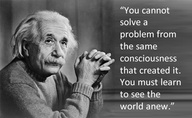
  5. We need to think about law in a new way. We cannot solve the problem at the same level of thinking that created it. (Einstein) Therefore we must re think the notion of lawyers as a separate profession and start looking at a more integral, multi-disciplinary approach to legal matters and legal training.

Law is fundamental.

Law is complicated.

It’s time for lawyers to embrace some of the advances in other professions, whether it’s different ways of thinking about things (De Bono), systems for creating values based organisations (Richard Barrett) or business models other than the traditional partnership model, for profit or not for profit (see John Lewis Partnership).  Including lessons on ethics, morality and leadership in law school curricula should be a no-brainer, as all advanced business programs have already realized.

There are only going to be more laws and more lawyers.  It’s time for a conscious approach to transformation in law.

It’s possible to do things differently

I just read an article called “Can there be ‘good’ corporations?” by Marjorie Kelly. She is busy writing a book called Owning Our Future: The Emerging Ownership Revolution. The article is REALLY good. Please read it. It points out some very interesting things around the rise of new forms of business, alternatives to the old “shareholders earn all the profit” model. It also explores the story of the John Lewis Partnership, the largest department store chain in England which is 100% owned by employees. I’m blown away. I’ve been into these stores hundreds of times and never known how radically different its underlying structure is.

Here’s an excerpt from the article:

  • 1. There is an alternative to capitalism. This is the heresy that the keepers of the temple do not wish us to utter. It is possible to organize a large, sophisticated, modern economy that tends toward fair and just outcomes, benefits the many rather than the few, and enables an enduring human presence on a flourishing Earth.
  • 2. Getting there is not only about regulation but about emergence. As organizational change theorist Margaret Wheatley writes, “emergence” refers to what happens when local actions spring up and connect through networks. Without warning, emergent phenomena can occur, such as the rise of the organic food movement. Such movements rely not on central leadership but on shared vision.
  • 3. The generative economy is not a legal exercise but the embodiment of an emerging value system. Companies in the generative economy are built around values; the John Lewis Partnership’s core value is fairness, while Organic Valley’s core values are sustainability and community.
  • 4. Generative values become enduring through the social architecture of ownership. The generative economy is built on a foundation of stakeholder ownership designed to generate and preserve real wealth—resources held and shared by our communities and the ecosystems we live in. These enterprises don’t have absentee ownership shares trading in a casino economy, but ownership held in human hands.

More people need to know that it is possible to do things differently. South Africa is an incredibly entrepreneurial country but young entrepreneurs need to know the alternatives or else they will simply create businesses modelled on the corporates of old which are out of alignment with the rising consciousness of current generations.  What worked for the Baby Boomers does not work for Generation X and Y. We need to do things differently. So read this article and go tell your friends that run their own businesses or might one day want to start their own business, to read it. It’s possible to do things differently.

Talking About a Revolution

The internet provides us with more information than you can shake a mouse at. We can google any topic and find ridiculous amounts of information – that to read in its entirety would take months if not years. I could give a billion examples. There’s nothing you can’t look up, except for maybe the restaurant a friend told me she’d heard about called something like “Alibaba’s 9 wives”. I’ll admit I never was able to locate it. So let’s say you have a problem to solve: your company is failing or your dog is ailing. You can start reading but you will have to be selective or else your company assets could be sold off and the dog dead by the time you’ve read all the potentially useful stuff.

Say you follow anywhere from 200 to 500 people on Twitter. (I have no idea what the averages are for this…bear with me). And say 100 of these people post links to articles on subjects you’re interested in professionally or personally. That’s 100 articles a day to choose from, on subjects of your choice, popping up in your Twitter account. 500 articles a week. 26 000 a year. And that’s if these people you’re following only post one link a day.

So there’s a tipping point. The point at which you stop researching and decide to take action. The point at which you stop researching models of cars you might like to buy and walk into a dealership.  The point at which you stop researching different diets and pick one to try. I believe the increasing availability of information is leading to analysis paralysis. There is simply too much available, too quickly. You need to act. Most of the time, you’ll be able to go back and research the next step.  Unless you were researching property prices or birth methods and have sold the house and had the baby.

I believe the universe is calling upon us to develop other skills. Not recalling information as much as being able to process information and intuit what will serve us. A surgeon can look up 10 ways of doing an operation instantly, but will still be required to choose which method is most suited to the case in front of him. And then the small task of performing the actual surgery of course. A lawyer can look up precedents instantly but will still be required to select which will support his case and which nuance of facts is most closely aligned to those before him. He’ll then have to actually weave the arguments together to convince the judge. I sense that the internet is forcing us to evolve faster and think smarter.  Schools and universities have not, for the most part, recognised that this is not a shift in emphasis, but a full scale revolution in learning. Information is not much of a currency anymore. Knowing STUFF is not that valuable. Knowing HOW things work, deep understanding and being able to critically evaluate options – that is valuable. For this reason it may make more sense for a company to upskill an existing employee who understands the HOW, rather than employ a graduate who knows the WHAT, but will take at least 2 years to develop the intuition and confidence to  be able to apply that knowledge.

I think the expression “Of those to whom much is given, much is expected” is applicable – in a different sort of way to the concept it usually refers to. In this sense it means that we have been given so much information, that with it comes a greater responsibility. A responsibility to use the information available to heal ourselves and the planet.  (At the risk of sounding a little Michael Jackson.)

The research on how our brains have developed as a result of things like the ice-age and human diet is fascinating. If we could look far into the future, I think we’d find that the rise of the internet will significantly affect how human brains think and how we evolve as a species.

But it could go any which way. Let’s imagine just 3 people surfing the net tonight. One is researching how to build nuclear bombs, one is looking up Heal The World lyrics while switching back and forth to Facebook and one is researching solutions to child malnutrition. What are YOU doing with all the information at your fingertips?

Tragic Shooting At a Law Firm

I’m not sure what to say about this week’s triple murder and suicide in the conference room of a Pretoria law firm. Surprisingly many people I have spoken to in the last 2 days had not heard about it.

It’s sad and it’s shocking.

Briefly, the facts are that there were 6 people in the room, 4 clients and 2 lawyers.  Martin van Deventer was on the one side and on the other were 3 directors of Mayborn, a property development company, namely Griessel, Erasmus and Van Heerden and their lawyer.

Griessel, Erasmus and Van Heerden bought Van Deventer’s farm for a property development. Half of the purchasing price was paid over to Van Deventer at the time of the sale, while the rest would have been paid at a later stage. At the meeting, the three buyers allegedly told Van Deventer that they could not pay him the rest of his money at this stage.

At this point Van Deventer got up and shot the 3 men, at point blank range, before he turned the gun on himself.

The lawyer for the 3 men, at whose office this took place, said: “I don’t know what went wrong. The meeting went well. The next moment he was shooting my clients.”

I don’t know what to make of that. The lawyer thought the meeting went well? Surely there must have been signs of enormous distress coming from Van Deventer? I know everyone cannot be deception experts like Dr Cal Lightman, but I can’t believe no one noticed anything at all until 4 people were dead.

Without much understanding of the dynamics I am hesitant to make any judgment. I  will say that I believe lawyers should be trained to handle client’s distress. I believe strongly that law cannot be separated from other disciplines such as psychology and economics. Entering into a commercial contract is essentially about an economic exchange, accountability and managing fear. That’s why people ask for a contract – they are fearful the other side will not behave as they have agreed and that they will suffer as a result.

I can only hope this serves to highlight the vulnerability of clients in legal negotiations and that some lawyers may be motivated to learn more about how to manage such processes with compassion.

Wherever right or wrong may lie in this story, it seems a terrible waste that four lives were lost.

PS. The comments of readers on the news24 website where I read about this incident are shockingly unconscious. The shallow level of engagement with this sad event really makes for frightening reading. I despair for our country when I read stuff like this.